
Best Hearing Aid Types and How They Work
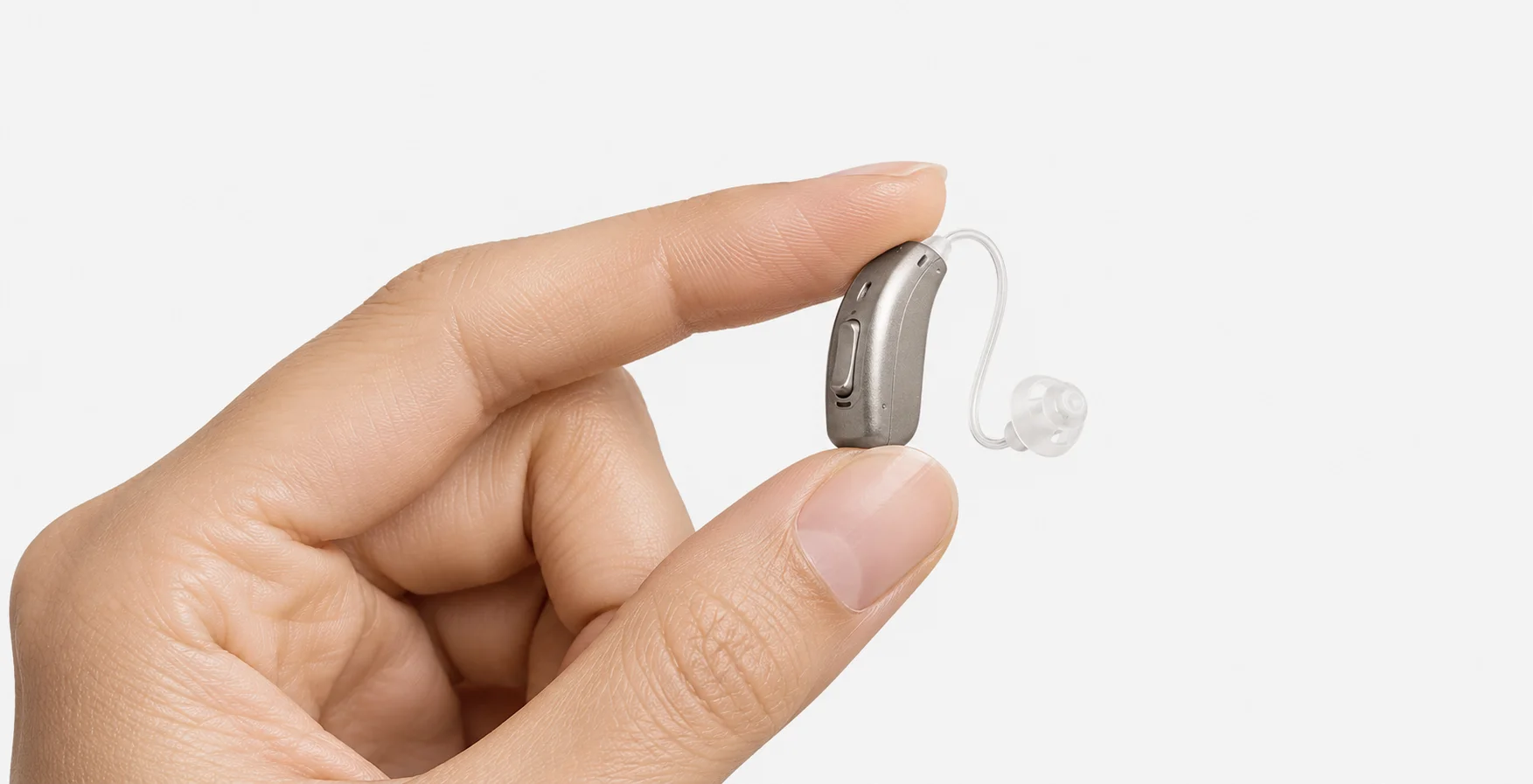
A close-up of a hand holding a small hearing aid
In this comprehensive guide, we’ll explore the best hearing aid types available today, delving into how these remarkable devices work to improve hearing and enhance the quality of life for people with hearing loss. Understanding the nuances of different hearing aids, from their technological features to their suitability for various degrees of hearing loss, is crucial for making informed decisions about your hearing health.
Understanding Hearing Loss

A smiling older woman fitting a behind-the-ear hearing aid
Hearing loss is a widespread condition affecting millions globally, characterized by a diminished ability to perceive sounds. It can manifest in various forms, impacting an individual’s communication, social interaction, and overall well-being. Recognizing the early signs and understanding the different types of hearing loss are vital first steps towards seeking appropriate hearing care and exploring potential solutions like modern hearing aids.
Types of Hearing Loss
There are generally three primary types of hearing loss. Each type requires a specific approach to treatment and hearing aid fitting.
| Type of Hearing Loss | Description |
|---|---|
| Conductive | Occurs when sound waves cannot reach the inner ear effectively, often due to blockages or issues in the outer or middle ear. |
| Sensorineural | The most common type, involves damage to the inner ear or the auditory nerve. |
| Mixed | A combination of both conductive and sensorineural issues. |
Impact of Hearing Loss on Daily Life
The impact of hearing loss on daily life can be profound, extending beyond just the inability to hear clearly. People with hearing loss often experience communication difficulties, leading to social isolation, frustration, and a decline in mental well-being. Everyday activities like engaging in conversations, watching television, or participating in group discussions can become challenging, underscoring the critical need for effective interventions, such as the right type of hearing aid, to improve hearing and restore confidence.
Importance of Hearing Tests
A comprehensive hearing test is the cornerstone of effective hearing care. It allows a qualified hearing specialist to accurately diagnose the type and degree of hearing loss, providing crucial information necessary for recommending the best hearing aid or other appropriate interventions. This diagnostic process is essential for tailoring a solution, whether it involves one hearing aid or two hearing aids, to meet the specific needs of the individual and ensure the most effective improvement in hearing.
Types of Hearing Aids
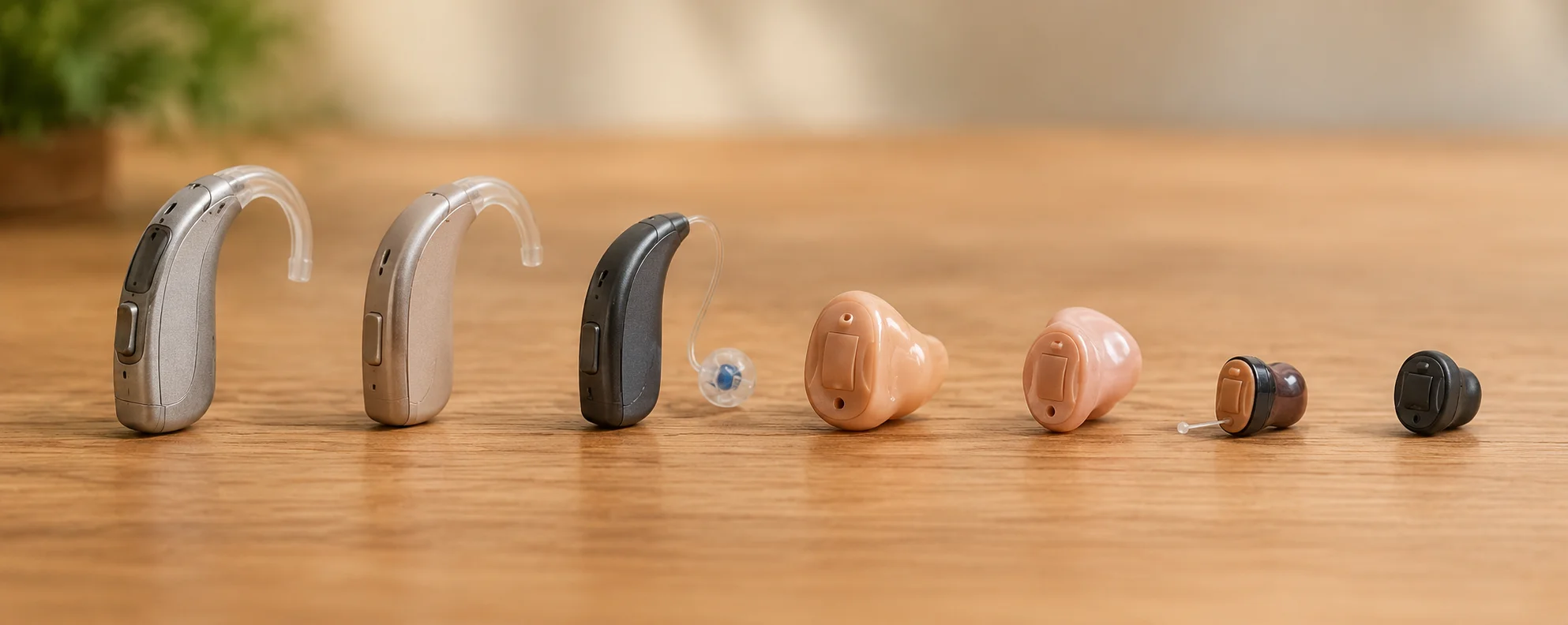
A row of different hearing aid styles on a wooden table under soft light
Styles of Hearing Aids
The market offers a diverse range of styles of hearing aids, each designed to cater to different degrees of hearing loss and aesthetic preferences. Choosing the appropriate type of hearing aid often depends on the individual’s specific needs.
| Hearing Aid Type | Description |
|---|---|
| Behind-The-Ear (BTE) | Sits behind the ear and is connected to an earmold. |
| In-The-Canal (ITC) | Custom-made to fit inside the ear canal. |
| Completely-In-Canal (CIC) | Offers high levels of discretion. |
| In-The-Ear (ITE) | Offers varying levels of discretion and power. |
Digital Hearing Aids vs. Analog
Modern hearing aids are predominantly digital, representing a significant advancement over their analog predecessors. Digital hearing aids process sound through sophisticated computer chips, allowing for greater customization, noise reduction, and sound clarity. This technology offers a more refined and adaptable listening experience, making them the preferred choice for effective hearing care and improving hearing across various environments.
| Feature | Digital Hearing Aids | Analog Hearing Aids |
|---|---|---|
| Sound Processing | Through sophisticated computer chips | Amplify all sounds uniformly |
| Benefits | Greater customization, noise reduction, sound clarity |
Choosing the Right Type of Hearing Aid
Selecting the best hearing aid involves a comprehensive understanding of an individual’s hearing loss, lifestyle, and preferences. A thorough hearing test performed by a hearing specialist is crucial to determine the degree of hearing loss and recommend suitable prescription hearing aids. Factors like the type of hearing loss, dexterity, cosmetic concerns, and even the cost of the hearing aid play a vital role in making an informed decision about the best hearing device. Whether it’s one hearing aid or two hearing aids, the goal is to improve hearing effectively.
How Hearing Aids Work

A young man sitting at a desk one ear fitted with an in-ear hearing aid looking at a tablet
Basic Functions of Hearing Aids
At their core, hearing aids work by amplifying sound to compensate for hearing loss. Every hearing aid, regardless of its style or technological sophistication, contains three primary components: a microphone, an amplifier, and a speaker (or receiver). The microphone picks up sounds from the environment, which are then processed and intensified by the amplifier. Finally, the speaker delivers the amplified sound into the ear canal, allowing people with hearing loss to perceive sounds that they might otherwise miss, thereby significantly improving hearing.
Understanding Digital Hearing Technology
Digital hearing aid technology is remarkably advanced, transforming raw sound into a digital code that can be manipulated to address specific hearing needs. This digital processing allows for sophisticated features such as noise cancellation, feedback suppression, and directional microphones, which focus on sounds coming from in front of the hearing aid user. This intelligent sound processing ensures that speech is clearer and background noise is minimized, providing a much more comfortable and effective listening experience for people with hearing loss, especially those with mild to moderate hearing loss.
Features and Benefits of Modern Hearing Aids
Modern hearing aids offer a plethora of features designed to enhance the quality of life for people with hearing loss. Beyond basic amplification, these devices can include Bluetooth connectivity for streaming audio directly from phones, rechargeable batteries for convenience, and even artificial intelligence for personalized sound adjustments. These advanced features contribute to a seamless listening experience, making new hearing aid models highly effective in various situations and significantly improving hearing health. They empower the hearing aid user to engage more fully with their surroundings.
Finding the Best Hearing Aid

Hearing aid accessories on a wooden table
Evaluating Your Needs
To find the best hearing aid, a comprehensive evaluation of your individual needs is paramount. This process typically begins with a thorough hearing test conducted by a qualified hearing specialist, which will accurately determine the type and degree of hearing loss you experience. Understanding whether you have mild to moderate hearing loss or profound hearing loss will significantly guide the selection process, as different types of hearing aids are designed for varying levels of amplification. Your lifestyle, cosmetic preferences, and even budget for the cost of the hearing aid will also play a crucial role in making an informed decision about the most suitable hearing device to improve hearing.
Best Hearing Aids on the Market
The market for modern hearing aids is continually evolving, offering an array of sophisticated hearing devices designed to address diverse hearing needs. While the “best hearing aid” is subjective and highly dependent on individual requirements, many reputable brands consistently produce high-quality models. These often include digital hearing aids with advanced features such as superior noise reduction, Bluetooth connectivity, and rechargeable batteries. A hearing specialist can provide personalized recommendations based on your specific hearing test results and discuss the benefits of various styles of hearing aids, from discreet in-the-canal (ITC) hearing aids to powerful behind-the-ear (BTE) hearing aids, ensuring you find a hearing aid that truly enhances your hearing health.
Hearing Aid Fitting Process
The hearing aid fitting process is a critical step in ensuring the optimal performance and comfort of your new hearing aid. After a hearing test and selection of prescription hearing aids, the hearing specialist will meticulously program the device to match your unique hearing loss profile. This involves fine-tuning the amplification levels and other settings to ensure sounds are clear and comfortable. For custom-made styles, like ITC hearing aids, an impression of your ear will be taken. Proper fitting is essential for preventing feedback and maximizing the effectiveness of the hearing aid, ultimately allowing people with hearing loss to experience significant improvement in hearing from their chosen hearing aids for adults.
Maximizing Your Hearing Experience

A close-up of a small hearing aid resting in the palm of a hand over a white surface
Tips for Adjusting to New Hearing Aids
Adjusting to new hearing aids can take time and patience, but with the right approach, the transition will significantly improve hearing. Start by wearing your hearing aid for short periods each day in quiet environments, gradually increasing the duration and exposure to more complex soundscapes. Pay attention to how different sounds are perceived and communicate any discomfort or issues to your hearing specialist, who can make necessary adjustments. Remember that your brain needs time to re-learn how to interpret sounds through the hearing devices, so consistent use is key to adapting and fully benefiting from your one hearing aid or two hearing aids.
Maintaining Your Hearing Aids
Proper maintenance is essential for extending the lifespan and ensuring the optimal performance of your hearing aids. Regular cleaning, as advised by your hearing specialist, is crucial to prevent wax buildup and debris from affecting the microphone or speaker. For digital hearing aid users, regularly checking and replacing batteries (or recharging rechargeable models) is also vital. Always handle your hearing aid with clean, dry hands and store them in a cool, dry place when not in use. Adhering to these simple care routines will ensure your hearing devices continue to improve hearing effectively for years to come.
Resources for Ongoing Support
Finding ongoing support is invaluable for people with hearing loss, especially when adapting to a new hearing aid. Your primary resource should always be your hearing specialist, who can provide follow-up appointments, adjustments, and address any concerns you might have regarding your type of hearing aid. Additionally, many organizations offer support groups and educational materials for hearing aid users, providing a platform to share experiences and gain practical advice. These resources contribute significantly to maintaining good hearing health and ensuring you continue to get the most out of your prescription hearing aids.


Pingback: Guide to Choosing the Perfect Siemens Hearing Aid