
Introduction
Hearing loss affects millions of people across India, yet many of its underlying causes remain poorly understood by the general public. Otosclerosis is one such condition — a significant but frequently overlooked cause of progressive hearing loss that can affect people as young as their teens or twenties, often at the peak of their personal and professional lives.
If you or someone you know has been told their hearing is gradually getting worse without any obvious external cause — no loud noise exposure, no infection, no visible damage — otosclerosis could be the reason. This article from EarMart.in explains exactly what otosclerosis is, what causes it, who is most at risk, and what treatment options are available today.
What Is Otosclerosis?
Otosclerosis is an abnormal bone remodelling process that affects the tiny bones of the middle ear — particularly the stapes, the smallest bone in the human body. Under normal conditions, these bones vibrate in response to sound waves and transmit that vibration to the inner ear, where it is converted into electrical signals that the brain interprets as sound.
In otosclerosis, abnormal bone growth develops around the stapes, gradually locking it in place. When the stapes can no longer vibrate freely, sound cannot travel efficiently from the middle ear to the inner ear — resulting in progressive conductive hearing loss.
In more advanced or aggressive cases, the abnormal bone growth spreads to the inner ear itself, damaging the delicate hair cells responsible for converting sound into nerve signals. When this happens, the condition produces sensorineural hearing loss in addition to conductive loss — a combination known as mixed hearing loss.
Otosclerosis almost always affects both ears, though one ear often deteriorates faster than the other. It progresses slowly in most cases, sometimes over many years, which is why many people do not notice it until the hearing loss becomes significant.
How Common Is Otosclerosis in India?
Otosclerosis is one of the leading causes of hearing loss in adults worldwide. Global estimates suggest it affects roughly one in every 200 to 250 people, though prevalence varies significantly across different ethnic populations.
Studies have consistently shown that otosclerosis is more prevalent in people of South Asian origin than in East Asian or African populations. India, with its large and genetically diverse population, carries a meaningful burden of this condition — yet awareness remains low, and many cases go undiagnosed for years because the gradual progression of hearing loss is often attributed to ageing, noise exposure, or simply ignored.
At EarMart.in, we see patients across Pune and across India who have been living with progressive hearing difficulty for years without ever receiving a clear diagnosis. Understanding the causes of otosclerosis is the first step toward getting the right help.
The Main Causes of Otosclerosis
Otosclerosis does not have a single, clear-cut cause. Research points to a combination of genetic, viral, hormonal, and immunological factors that interact to trigger abnormal bone remodelling in susceptible individuals. Here is a detailed look at each.
1. Genetic Inheritance — The Primary Driver
Genetics is the most well-established cause of otosclerosis. The condition runs strongly in families, and if one of your parents has or had otosclerosis, your risk of developing it is significantly elevated.
Research has identified otosclerosis as an autosomal dominant condition with incomplete penetrance — meaning the responsible gene is passed from parent to child, but not everyone who carries the gene will actually develop the condition. Studies estimate that only about 25 to 40 percent of people who carry the genetic mutation will go on to develop clinically significant otosclerosis.
This explains why the condition can appear to skip generations or affect only some members of a family while leaving others unaffected. Several specific gene mutations have been associated with otosclerosis, including mutations affecting the TGFB1 gene, which plays a role in regulating bone turnover and remodelling.
If you have a family history of progressive hearing loss — particularly if a parent or sibling was diagnosed with otosclerosis or underwent a stapedectomy — your own hearing should be monitored regularly by a certified audiologist.
2. Measles Virus — A Key Environmental Trigger
One of the most compelling and extensively researched environmental causes of otosclerosis is the measles virus (rubeola). Studies going back several decades have detected measles virus RNA in otosclerotic bone tissue, suggesting that a persistent, low-level measles infection in the cells of the middle ear may trigger or accelerate the abnormal bone growth process in genetically susceptible individuals.
The measles hypothesis helps explain why otosclerosis rates in certain populations declined following widespread measles vaccination programmes — a finding that has been documented in several European countries. It also underscores the broader public health value of childhood vaccination, which protects not only against measles itself but potentially against some of its long-term complications including hearing loss.
In India, where measles vaccination coverage has historically been uneven across urban and rural populations, this viral trigger may have contributed to a higher burden of otosclerosis in some communities.
3. Hormonal Factors — Why Women Are More Affected
Otosclerosis is significantly more common in women than in men, with a female-to-male ratio of approximately two to one. This striking gender disparity has long pointed researchers toward hormonal influences — specifically the role of oestrogen in regulating bone metabolism.
Several observations support the hormonal connection. First, otosclerosis most commonly appears or accelerates during pregnancy, when oestrogen levels are elevated dramatically. Many women first notice significant hearing deterioration during or shortly after a pregnancy. Second, the condition often worsens with subsequent pregnancies. Third, some research has suggested that oral contraceptive use may influence the rate of otosclerosis progression in susceptible women, though findings remain somewhat mixed.
The biological mechanism appears to involve oestrogen’s influence on the cells responsible for bone remodelling — the osteoblasts and osteoclasts. When oestrogen levels fluctuate significantly, as they do during pregnancy or the menstrual cycle, the regulatory balance of bone turnover in genetically predisposed individuals may be disrupted, creating conditions favourable to abnormal growth.
Women with a family history of otosclerosis should be especially vigilant about monitoring their hearing during and after pregnancy.
4. Autoimmune and Inflammatory Mechanisms
Growing research evidence suggests that the immune system plays a meaningful role in triggering and sustaining the abnormal bone remodelling seen in otosclerosis. Some scientists now view otosclerosis as partly an autoimmune condition — in which the body’s own immune system mistakenly attacks the bone tissue of the middle and inner ear.
Elevated levels of certain inflammatory markers, including cytokines and specific immunoglobulins, have been detected in the middle ear fluid of otosclerosis patients. The presence of measles virus particles may activate an abnormal immune response in genetically susceptible individuals, creating a chronic, low-grade inflammatory process that slowly destroys normal bone architecture and replaces it with the disorganised, spongy bone characteristic of otosclerosis.
This inflammatory dimension also helps explain why some patients experience more rapid progression than others — the intensity of the immune response, which varies from person to person, may influence how quickly the abnormal bone growth advances.
5. Fluoride Deficiency
An interesting and somewhat controversial line of research has linked low dietary fluoride intake with increased risk of otosclerosis progression. Fluoride is known to stabilise the crystals within bone tissue, and some evidence suggests it may slow the conversion of normal dense bone into the spongy, abnormal bone seen in otosclerosis.
Historically, sodium fluoride was used as a medical treatment to slow the progression of otosclerosis before modern surgical options became widely available. While its use as a treatment has declined significantly with the advent of stapedectomy surgery, the underlying biology suggests that adequate fluoride levels in the body — from drinking water and diet — may be relevant to bone health in the inner ear.
Areas in India with naturally low fluoride content in groundwater may theoretically be associated with marginally higher rates of otosclerosis progression, though this remains an area of ongoing research rather than established clinical guidance.
6. Psychological Stress and Metabolic Factors
Emerging research has also drawn tentative links between chronic psychological stress, metabolic conditions such as thyroid dysfunction, and otosclerosis activity. Stress hormones like cortisol influence bone metabolism throughout the body, and it is plausible — though not yet definitively proven — that chronic stress may contribute to abnormal bone remodelling in predisposed individuals.
Similarly, hypothyroidism, which affects bone turnover rates across the entire skeleton, has been studied in relation to otosclerosis, with some researchers noting a higher co-occurrence of the two conditions in certain patient groups. However, these associations are still being investigated and should not be interpreted as direct causal relationships.
Risk Factors for Otosclerosis at a Glance
While otosclerosis can develop in anyone, the following factors significantly increase your risk:
Family history — Having a parent or sibling with otosclerosis or with a history of progressive unexplained hearing loss is the single strongest risk factor.
Being female — Women are approximately twice as likely as men to develop clinically significant otosclerosis, likely due to hormonal influences.
Pregnancy — The hormonal changes of pregnancy can trigger or accelerate otosclerosis in genetically predisposed women. Multiple pregnancies carry a cumulative effect.
Age of onset — Otosclerosis most commonly begins between the ages of 15 and 35. Early-onset cases tend to have a stronger genetic component.
Ethnicity — People of European or South Asian descent appear to have higher rates of otosclerosis than those of East Asian or African descent.
Measles infection history — Particularly relevant for those born before widespread MMR vaccination coverage in India.
Low fluoride intake — Possibly relevant to progression rate in areas with fluoride-deficient water supply.
Recognising the Symptoms of Otosclerosis
Understanding the causes of otosclerosis is important, but recognising its symptoms early is what allows people to seek help before significant hearing loss sets in. The most common signs include:
Gradual, progressive hearing loss — typically beginning in one ear before affecting the other. The hearing loss is usually conductive in nature, meaning sounds seem muffled or distant even though the person can still hear reasonably well in quiet environments.
Difficulty understanding speech in noise — one of the earliest and most commonly reported complaints. Conversations in crowded environments like markets, restaurants, or family gatherings become increasingly difficult.
A preference for noisy environments — a paradoxical and distinctive feature of otosclerosis known as paracusis Willisii. Some patients actually report hearing speech better in noisy surroundings than in quiet ones, because background noise causes people to speak more loudly. This counterintuitive pattern is a classic clinical clue that otosclerosis may be involved.
Tinnitus — ringing, buzzing, or hissing sounds in the ear are reported by a significant proportion of otosclerosis patients. Tinnitus may appear before the hearing loss becomes noticeable.
Dizziness or balance disturbance — less common, but present in some patients, particularly when the inner ear is involved.
How Is Otosclerosis Diagnosed?
Otosclerosis is typically diagnosed through a combination of clinical history, audiometry, and tympanometry. A pure tone audiogram will reveal the characteristic pattern of conductive or mixed hearing loss associated with the condition. Tympanometry assesses the movement of the eardrum and middle ear bones. In some cases, a CT scan of the temporal bone may be ordered to visualise the extent of abnormal bone growth.
At EarMart.in, our RCI-certified audiologists are trained to identify the audiological patterns consistent with otosclerosis and to refer patients for specialist ENT and surgical evaluation when appropriate. A free hearing test is the most important first step you can take.
Treatment Options for Otosclerosis
Otosclerosis is a manageable condition, and most patients have access to effective treatment. The main options are:
Stapedectomy or Stapedotomy Surgery
The most effective treatment for conductive otosclerosis is surgical. In a stapedectomy, the fixed stapes bone is removed and replaced with a small prosthesis that restores the vibration pathway. In the less invasive stapedotomy, a small hole is made in the stapes footplate and a prosthesis is fitted through it.
Both procedures have very high success rates — the majority of patients experience significant hearing improvement after surgery. The procedure is performed under local or general anaesthesia and is routinely performed by ENT surgeons in major cities including Pune.
Hearing Aids
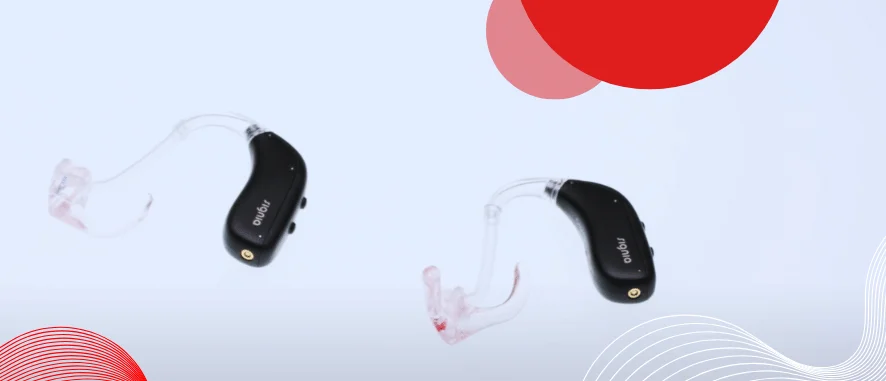
For patients who are not candidates for surgery, or who prefer a non-surgical approach, hearing aids are an effective solution for the conductive and mixed hearing loss caused by otosclerosis. Modern digital hearing aids are highly capable of compensating for the type and degree of loss associated with this condition.
At EarMart.in, we offer a full range of hearing aids from internationally trusted brands — including Signia, Phonak, Widex, ReSound, and Oticon — with professional fitting by certified audiologists. Our 30-day free trial and three-year warranty ensure you can find the right solution with complete peace of mind.
Sodium Fluoride Therapy
In some cases, particularly where the inner ear is involved and the hearing loss has a sensorineural component, sodium fluoride supplements have been prescribed to slow the rate of bone remodelling. This approach does not reverse existing hearing loss but may slow further progression in select patients. It is always used under close medical supervision.
Why Early Diagnosis Matters
Otosclerosis is progressive. Left undiagnosed and untreated, hearing loss will continue to worsen over time — sometimes slowly over decades, and in some cases more rapidly. Early diagnosis creates the best opportunity for surgical intervention while hearing is still relatively preserved, and for hearing aid fitting that maintains quality of communication and quality of life throughout the journey.
Many patients with otosclerosis are young adults — in their twenties and thirties — who are raising families, building careers, and maintaining active social lives. Hearing loss at this stage of life carries enormous personal, professional, and emotional costs. The sooner the condition is identified, the sooner it can be managed effectively.
How EarMart.in Can Help
If you are experiencing gradual hearing loss, difficulty understanding speech, tinnitus, or any of the other symptoms described in this article — particularly if you have a family history of hearing problems — EarMart.in is here to support you.
Our RCI-certified audiologists offer free hearing tests at your home or at partner clinics across Pune, including Wakad, Hinjawadi, Baner, Kothrud, Aundh, Pimpri, and Chinchwad, as well as across India. We provide complete audiological evaluation, personalised device recommendations, professional hearing aid fitting, and ongoing follow-up care.
You do not need a referral to book a free hearing test. Simply contact EarMart.in and take the first step toward understanding your hearing health.
Frequently Asked Questions
Can otosclerosis be cured completely? Stapedectomy surgery is highly effective at restoring hearing lost due to the fixation of the stapes bone and is considered curative for the conductive component of hearing loss. However, if the inner ear has also been affected, some degree of sensorineural hearing loss may remain and will require a hearing aid for management.
Is otosclerosis hereditary? Yes. Genetics is the strongest known cause of otosclerosis. The condition follows an autosomal dominant inheritance pattern with incomplete penetrance, meaning it runs in families but does not affect every person who carries the gene.
At what age does otosclerosis usually start? Otosclerosis typically begins between the ages of 15 and 35, though it can develop at any age. The hearing loss usually progresses gradually over many years before becoming clinically significant.
Can pregnancy make otosclerosis worse? Yes. Hormonal changes during pregnancy, particularly elevated oestrogen levels, are known to accelerate the progression of otosclerosis in susceptible women. Many women first notice significant hearing deterioration during or after a pregnancy.
Is otosclerosis more common in women? Yes. Women develop clinically significant otosclerosis at approximately twice the rate of men, almost certainly due to the influence of oestrogen on bone metabolism.
Can hearing aids help with otosclerosis? Absolutely. Hearing aids are an effective and widely used solution for the hearing loss caused by otosclerosis, particularly for patients who are not suitable for surgery or prefer a non-surgical approach. Modern digital hearing aids from brands like Signia, Phonak, and Widex compensate well for the conductive and mixed hearing loss patterns associated with this condition.
Can otosclerosis affect both ears? Yes. Otosclerosis is bilateral — affecting both ears — in approximately 70 to 80 percent of cases. However, the two ears often progress at different rates, and one ear may be significantly more affected than the other.
How is otosclerosis different from age-related hearing loss? Age-related hearing loss (presbycusis) is caused by the gradual deterioration of the hair cells in the inner ear and typically affects both ears equally and symmetrically. Otosclerosis, on the other hand, involves abnormal bone growth in the middle ear, tends to affect younger people, and produces a conductive or mixed pattern of hearing loss rather than a purely sensorineural one.
Conclusion
Otosclerosis is a complex condition shaped by the interplay of genetics, viral history, hormonal fluctuations, and immune system activity. It is not caused by lifestyle choices or preventable behaviours in most cases — but it is manageable, treatable, and, with early diagnosis, far less disruptive to daily life than it might otherwise become.
If you have noticed your hearing gradually worsening — especially if you are a young adult, a woman who has been through pregnancy, or someone with a family history of hearing loss — do not wait to have your hearing professionally assessed. Otosclerosis responds well to both surgical treatment and modern hearing aid technology when identified in a timely manner.
At EarMart.in, we are committed to helping every person in India access expert hearing care — with free hearing tests, certified audiologist support, and a complete range of world-class hearing solutions backed by a 30-day trial and three-year warranty.
Your hearing matters. Book your free test today.
Disclaimer: This article is intended for general informational purposes only and does not constitute medical advice. Please consult a qualified audiologist or ENT specialist for personalised diagnosis and treatment recommendations.

Leave a Comment
Your email address will not be published. Required fields are marked *