
Discover the best hearing aids in India designed for mild to moderate hearing loss. Elevate your listening experience and reconnect with the sounds you love.
Understanding Hearing Loss: Causes and Types
Hearing loss is one of the most common sensory impairments affecting millions of Indians across all age groups. It occurs when any part of the ear — the outer, middle, or inner ear — is damaged or does not function normally.
Types of hearing loss include:
- Conductive hearing loss — caused by problems in the outer or middle ear, such as earwax blockage, fluid accumulation, or a perforated eardrum. Often medically or surgically treatable.
- Sensorineural hearing loss — the most common type, resulting from damage to the inner ear (cochlea) or auditory nerve. Usually permanent but manageable with hearing aids.
- Mixed hearing loss — a combination of both conductive and sensorineural components.
Common causes include prolonged exposure to loud noise (a growing concern in urban India), ageing (presbycusis), genetic factors, infections such as chronic otitis media, ototoxic medications, and head trauma.
Hearing loss is classified by severity:
| Severity | Hearing Threshold |
|---|---|
| Normal | 0–25 dB |
| Mild | 26–40 dB |
| Moderate | 41–60 dB |
| Severe | 61–80 dB |
| Profound | 81 dB and above |
Mild to moderate hearing loss — the focus of this article — means difficulty following conversations in noisy environments, missing soft sounds, and frequently asking people to repeat themselves.
The Importance of Hearing Aids for Mild to Moderate Hearing Loss
Many people with mild to moderate hearing loss delay seeking help, often dismissing early signs as minor inconveniences. This is a costly mistake. Untreated hearing loss is linked to cognitive decline, social withdrawal, depression, and reduced workplace productivity.
Hearing aids for mild to moderate loss are highly effective precisely because the auditory nerve is still largely intact. Unlike severe cases, the brain needs only modest amplification to process sound accurately. Early intervention means:
- Better speech clarity and comprehension
- Reduced listening fatigue
- Improved mental health and social confidence
- Slower progression of associated cognitive risks
- Greater ease of adaptation to the device
In India, where open-plan offices, noisy traffic, and large family gatherings are everyday realities, a well-fitted hearing aid can dramatically transform quality of life.
Key Features to Look for in Hearing Aids
When evaluating hearing aids for mild to moderate hearing loss, keep the following features front of mind:
1. Sound Processing Technology Modern digital hearing aids use sophisticated algorithms to separate speech from background noise. Look for multi-channel processing and adaptive directionality, which automatically focus on the sound source you’re facing.
2. Bluetooth Connectivity Most contemporary aids support Bluetooth streaming from smartphones, TVs, and laptops — a significant convenience for work calls and entertainment.
3. Rechargeable Batteries Lithium-ion rechargeable options eliminate the hassle of tiny disposable batteries. A full charge typically lasts 16–24 hours, ideal for Indian users who prefer low-maintenance devices.
4. Noise Reduction & Feedback Cancellation Digital noise reduction suppresses background noise in busy environments like markets or offices. Feedback cancellation prevents the uncomfortable whistling sound.
5. Tinnitus Masking Many people with hearing loss also experience tinnitus (ringing in the ears). Dedicated masking features can provide significant relief.
6. IP Rating (Water & Dust Resistance) India’s humid climate and dusty conditions make an IP67 or IP68 rating highly desirable.
7. App Control Companion smartphone apps allow discreet volume and programme adjustments without touching the device.
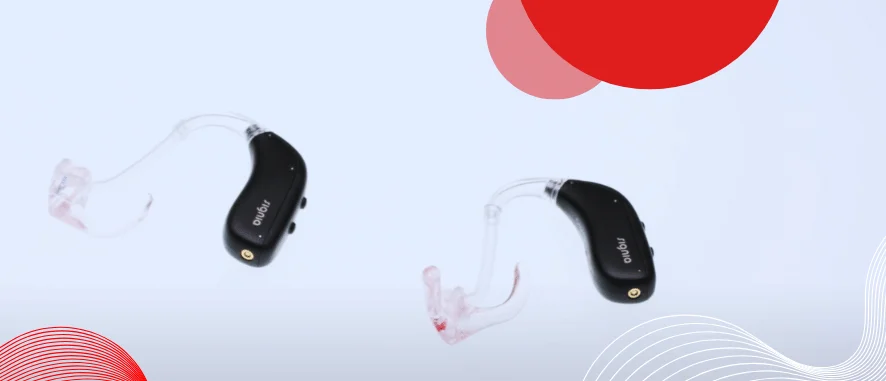
8. Form Factor Options include Behind-the-Ear (BTE), Receiver-in-Canal (RIC/RITE), In-the-Ear (ITE), and Completely-in-Canal (CIC). RIC styles are the most popular for mild to moderate loss due to their balance of power, discretion, and comfort.
Top Brands of Hearing Aids Available in India
Several global and domestic brands have a strong presence in India. Here are the most reputable:
1. Phonak (Switzerland)
One of the world’s leading hearing aid manufacturers, Phonak is widely available through authorised centres in major Indian cities. Their Audéo series is particularly well-regarded for mild to moderate loss, offering excellent speech understanding and seamless Bluetooth integration.
2. Signia (Germany)
Formerly Siemens Audiology, Signia combines German engineering with sleek design. Their Styletto and Pure Charge&Go models are popular choices in India, featuring Own Voice Processing (OVP) technology that makes the user’s own voice sound more natural.
3. Widex (Denmark)
Known for exceptionally natural sound quality, Widex hearing aids use a unique sound philosophy called “True Input Technology.” The MOMENT series is especially appreciated by music lovers and those sensitive to artificial-sounding amplification.
4. Oticon (Denmark)
Oticon’s BrainHearing technology is designed to support how the brain naturally processes sound. The Oticon More and Real series are strong contenders for mild to moderate loss.
5. ReSound (Denmark)
ReSound offers the widest Bluetooth compatibility of any hearing aid brand, including direct streaming from Android and iOS. The ReSound NEXIA and Omnia models are available in India through certified audiologists.
6. Starkey (USA)
The only major hearing aid brand headquartered in the United States, Starkey’s Evolv AI and Genesis AI lines incorporate artificial intelligence for real-time sound adjustments. Starkey also has a notable charitable presence in India.
7. Unitron (Canada)
A budget-friendlier alternative under the Sonova group (same parent company as Phonak), Unitron provides solid performance at a more accessible price point — a practical choice for cost-conscious Indian buyers.
8. Interton & Bernafon
These are additional Sonova and William Demant group brands available in India, often offering mid-range solutions with reliable performance.
9. Sibelmed / Arphi / Vivante (Domestic/Budget Options)
For buyers with tighter budgets, several India-specific and budget international brands exist, though they generally lack the advanced features and after-sales support of the premium brands above.
Comparison of Popular Hearing Aids for Mild to Moderate Hearing Loss
| Model | Brand | Style | Key Feature | Approx. India Price (per pair) |
|---|---|---|---|---|
| Phonak Audéo Lumity | Phonak | RIC | AutoSense OS 5.0, Roger Direct | ₹1,20,000–₹2,20,000 |
| Signia Pure Charge&Go AX | Signia | RIC | Augmented Xperience, OVP | ₹1,00,000–₹1,80,000 |
| Widex MOMENT Sheer | Widex | RIC | ZeroDelay technology, natural sound | ₹90,000–₹1,60,000 |
| Oticon Real 1 | Oticon | RIC | MoreSound Intelligence 3.0 | ₹1,10,000–₹2,00,000 |
| ReSound NEXIA | ReSound | RIC | Auracast Bluetooth LE | ₹1,00,000–₹1,70,000 |
| Starkey Genesis AI | Starkey | RIC/ITE | Edge Mode+, health tracking | ₹1,20,000–₹2,00,000 |
| Unitron Vivante | Unitron | RIC | AutoPro 4, Tempus platform | ₹60,000–₹1,10,000 |
| Phonak Audéo Life | Phonak | RIC | IP68, fully waterproof | ₹1,40,000–₹2,40,000 |
Prices are indicative and vary by city, clinic, and bundled services. Always obtain a formal quote from a certified audiologist.
How to Choose the Right Hearing Aid for Your Needs
Selecting the right hearing aid is not a one-size-fits-all decision. Here’s a practical framework:
Step 1: Get a Professional Hearing Evaluation Before any purchase, undergo a comprehensive audiological evaluation (pure tone audiometry + speech audiometry) to understand your specific hearing profile — not just the degree, but the frequency pattern of your loss.
Step 2: Match Technology to Lifestyle
- Mostly at home, quiet environments → entry-level technology suffices
- Active social life, restaurants, meetings → mid-level technology with strong noise management
- Frequent travel, outdoor activities, business meetings → premium technology with advanced directional microphones
Step 3: Consider Form and Discretion RIC/RITE styles are the sweet spot for mild to moderate loss. CIC or IIC (Invisible-in-Canal) devices are available for those who prioritise discretion, though they have smaller batteries and fewer features.
Step 4: Trial Period Always ask for a trial period (typically 30–45 days in India). Hearing aids must be fine-tuned to your environment, and a trial ensures you are satisfied before committing.
Step 5: After-Sales Service Verify the service network in your city. Premium brands typically offer 1–3 years of free follow-up adjustments. This is crucial — a hearing aid without proper fitting and follow-up is a waste of money.
Step 6: Insurance & Government Schemes Check if your employer’s health insurance covers hearing aids. Under the Assistance to Disabled Persons (ADIP) scheme, the Government of India provides free or subsidised hearing aids to eligible individuals.
The Role of Audiologists in Hearing Aid Selection
An audiologist is a trained healthcare professional specialising in the evaluation, diagnosis, and non-medical treatment of hearing disorders. In India, look for audiologists with a Masters in Audiology & Speech-Language Pathology (MASLP) or a Bachelor of Audiology & Speech-Language Pathology (BASLP) from a recognised university.
The audiologist’s role goes far beyond simply selling a device. They:
- Conduct diagnostic tests to determine the type and degree of hearing loss
- Recommend appropriate hearing aid technology based on your audiogram
- Programme and fine-tune the hearing aid using real-ear measurement (REM) — a gold standard fitting verification tool
- Provide counselling and auditory rehabilitation guidance
- Offer ongoing follow-up adjustments as your hearing or lifestyle needs evolve
In India, reputable audiology clinics can be found through the All India Speech and Hearing Association (AISHA) or major hospital chains such as Apollo, Fortis, and AIIMS-affiliated centres. Standalone clinics like EarMart, Vibrant Hearing, and Hearing Solutions India also maintain strong reputations in metros.
Never purchase a hearing aid from an unqualified vendor or online marketplace without a proper audiological evaluation — incorrect fitting can worsen hearing health.
Pricing and Budget Considerations for Hearing Aids
Hearing aid prices in India span a wide range:
| Tier | Price Range (per pair) | What to Expect |
|---|---|---|
| Entry-level | ₹15,000–₹40,000 | Basic digital processing, limited noise management |
| Mid-range | ₹40,000–₹90,000 | Better noise reduction, Bluetooth on some models |
| Premium | ₹90,000–₹2,50,000 | Advanced AI processing, full Bluetooth, rechargeable, apps |
| Ultra-premium | ₹2,50,000+ | Top-tier features, custom IIC styles |
Tips for Indian buyers:
- GST on hearing aids is 5%, making them relatively affordable compared to many other medical devices.
- The ADIP scheme (Ministry of Social Justice & Empowerment) provides free aids to BPL families with 40%+ disability.
- Some PSU and central government employees can claim hearing aids under CGHS.
- EMI options are increasingly available at authorised clinics — ask about no-cost EMI on credit cards.
- Avoid grey market imports — you lose warranty, after-sales service, and the device may not be calibrated for Indian acoustic environments.
- Budget for annual servicing and accessories (wax guards, domes, tubes) — roughly ₹2,000–₹5,000 per year for premium devices.
Maintenance and Care Tips for Hearing Aids
A hearing aid is a precision electronic device that, with proper care, can last 5–7 years. In India’s climate — characterised by heat, humidity, and dust — diligent maintenance is especially important.
Daily Care:
- Wipe devices with a soft, dry cloth each evening to remove moisture and earwax
- Open the battery door overnight (or place rechargeable aids in the charging case) to allow any trapped moisture to escape
- Avoid wearing aids while bathing, swimming, or in heavy rain unless they carry an IP68 rating
Weekly Care:
- Use a hearing aid cleaning kit (brush, wax pick, and vent cleaner) to clear wax from microphone ports and receivers
- Check and replace wax guards if blocked — a common reason for reduced volume or distorted sound
Moisture Management:
- Invest in a hearing aid dehumidifier or drying box — essential in Indian monsoon conditions. A good electronic desiccant dryer costs ₹1,500–₹4,000 and significantly extends device life.
Storage:
- Store in a cool, dry place away from direct sunlight. Avoid leaving aids in cars during summer.
Service Schedules:
- Visit your audiologist every 6–12 months for a professional clean, inspection, and any necessary reprogramming.
Battery Tips:
- For zinc-air batteries, allow them to “breathe” for 60 seconds after removing the tab before inserting — this activates the battery fully.
Conclusion: Enhancing Quality of Life with the Right Hearing Aid
Mild to moderate hearing loss need not mean a diminished life. Today’s hearing aids are remarkable feats of engineering — discreet, intelligent, and genuinely transformative. Whether you’re a professional navigating boardroom meetings in Mumbai, a retiree enjoying family conversations in Pune, or a student keeping up with lectures in Delhi, there is a hearing aid designed precisely for your world.
The Indian hearing care market has matured significantly, with access to world-class brands, trained audiologists, and government support schemes making better hearing more accessible than ever before. The key is to act early, seek professional guidance, and choose a device that fits not just your audiogram but your lifestyle, budget, and long-term needs.
Do not let hesitation or stigma stand between you and the sounds you love. A conversation with a qualified audiologist is the single best first step you can take — and it could change everything.
This article is for informational purposes only and does not constitute medical advice. Please consult a licensed audiologist or ENT specialist for personalised hearing health guidance.

Leave a Comment
Your email address will not be published. Required fields are marked *