
If you have been struggling to follow conversations, asking people to repeat themselves, or turning up the TV louder than usual, you are not alone. Millions of adults live with some degree of hearing loss, and many go years without doing anything about it — largely because traditional hearing aids have always felt out of reach, both in terms of cost and the hassle of clinic visits.
That changed in a big way in 2022, and by 2026 the market has matured into something genuinely impressive. Over-the-counter (OTC) hearing aids are now a legitimate, affordable, and widely accessible solution for a huge portion of the population. This guide covers everything you need to know before you buy.
What Are OTC Hearing Aids?
Over-the-counter hearing aids are FDA-regulated devices that adults can purchase without a prescription, a hearing exam, or a visit to an audiologist. You can buy them online, in pharmacies, or in electronics stores and use them right out of the box.
The FDA officially established the OTC hearing aid category in October 2022, opening the door for a wave of direct-to-consumer brands to compete in a space previously dominated by prescription-only dispensers. The goal was to reduce cost barriers and improve access for the tens of millions of Americans with mild to moderate hearing loss who had never sought treatment.
Who Are OTC Hearing Aids Designed For?
OTC hearing aids are intended for adults aged 18 and older who have mild to moderate hearing loss. This is the sweet spot where the technology delivers real, meaningful benefit without requiring the customized fitting and tuning that severe or profound hearing loss demands.
Signs that you may fall into the mild to moderate category include:
- Difficulty following speech in noisy environments like restaurants or crowded rooms
- Frequently mishearing words in normal conversation
- Needing to ask people to repeat themselves
- Struggling to hear clearly on phone calls
- Finding yourself fatigued after conversations that require extra concentration
If you suspect your hearing loss is more severe, or if you experience symptoms like sudden hearing loss, dizziness, pain, or drainage from the ear, the FDA recommends consulting a hearing health professional before turning to OTC options.
How OTC Hearing Aids Have Changed
When the first OTC devices hit shelves in late 2022, critics were skeptical. Early offerings were essentially glorified amplifiers — they made everything louder without much intelligence behind the processing. That criticism no longer holds in 2026.
The best OTC hearing aids today feature genuine AI-powered sound processing, Bluetooth 5.3 connectivity, smartphone app control for real-time adjustments, rechargeable batteries lasting 20 to 30 hours, tinnitus therapy support, and water-resistant builds suitable for everyday wear. The performance gap between OTC and prescription devices, for mild to moderate hearing loss, has narrowed to a point where it is no longer the defining factor in the decision for most buyers.
Per FDA regulations, OTC hearing aids are capped at 20 dB of average gain and a maximum output of 117 dB SPL — limits that are appropriate for the intended audience but do represent a hard ceiling for users with greater amplification needs.
OTC Hearing Aids vs. Prescription Hearing Aids
Understanding the differences between OTC and prescription devices helps you make a more informed decision.
Prescription hearing aids are fitted and programmed by a licensed audiologist based on your specific audiogram. They can address a wider range of hearing loss severity, offer deeper customization, and come with ongoing professional support. The trade-off is cost — prescription devices can run anywhere from $3,000 to $7,000 or more per pair, and that figure often does not include follow-up visits.
OTC hearing aids eliminate the clinical layer. You self-assess your hearing, choose a device based on your needs and budget, and adjust settings yourself through a companion app or preset programs. Pricing typically ranges from around $200 to $1,500 per pair — a fraction of the prescription cost.
For adults with mild to moderate hearing loss who are comfortable with some self-management, OTC hearing aids offer excellent value. For those with more complex needs or who prefer professional guidance at every step, prescription devices remain the better route.
Key Features to Look For in OTC Hearing Aids
Not all OTC hearing aids are created equal. Here are the features worth evaluating before making a purchase.
Sound Processing Quality The core job of a hearing aid is to make speech clearer, not just louder. Look for devices with dedicated speech-enhancement technology and background noise reduction. AI-powered processing, now available in several OTC models, can dynamically adjust amplification depending on your listening environment.
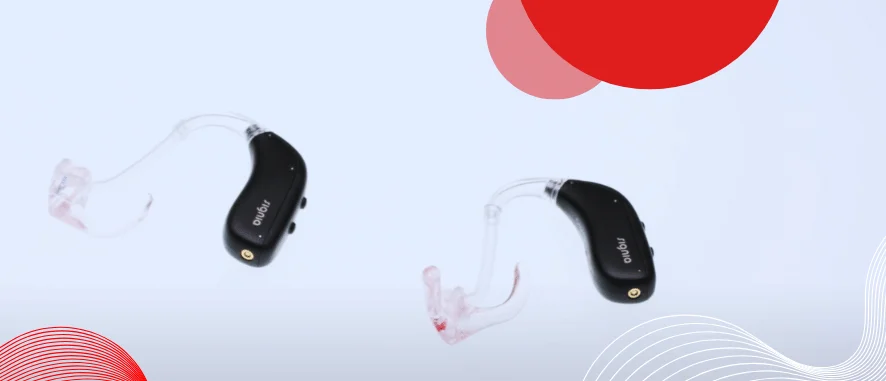
Fit and Style OTC hearing aids come in a few main form factors. Behind-the-ear (BTE) models sit over the ear and are generally easier to handle and insert, making them a popular choice for first-time users or those with dexterity challenges. Receiver-in-canal (RIC) designs are slimmer, with the speaker sitting inside the ear canal for a more discreet appearance. Completely-in-canal (CIC) and invisible-in-canal (IIC) styles are the most discreet options but can be trickier to manage.
Bluetooth Connectivity Modern OTC hearing aids with Bluetooth allow you to stream audio directly from your phone for calls, music, and video content. Some models support both iOS and Android, while others are limited to one ecosystem. If streaming matters to you, verify compatibility before buying.
Battery Type Rechargeable hearing aids have largely become the standard. Most quality OTC models now offer 20 to 30 hours of use per charge, with portable charging cases that add extra charges on the go. Disposable battery models are still available and can be convenient for extended travel or users who prefer not to worry about charging schedules.
App Control A companion smartphone app lets you adjust volume, switch between listening programs, fine-tune frequencies, and sometimes connect with remote support specialists. The quality of the app varies significantly between brands, so it is worth checking user reviews before committing.
Trial Period and Support Reputable OTC brands offer trial periods ranging from 30 to 45 days, giving you time to test the devices in real-world conditions before committing. Access to hearing instrument specialists via phone or chat adds significant value, especially when you are getting started.
Top OTC Hearing Aid Brands in 2026
Several brands have risen to the top of independent testing in 2026.
Jabra Enhance consistently earns high marks for sound quality, speech clarity, and after-sale support. The Select 700 model features SoundScape technology, up to 30 hours of battery life per charge, and four operational listening modes. It is widely regarded as a benchmark for overall OTC performance.
MDHearing offers strong value at accessible price points. Their NEO XS model is praised for its discreet design and affordability, while the VOLT 4 provides a solid BTE alternative. MDHearing’s in-house hearing specialists are available for setup help and customization calls, which is reassuring for first-time users.
Elehear has made a strong impression with the Beyond Pro, which independent testing from HearingTracker has ranked at the top of OTC performance overall. It features Bluetooth 5.3, AI-powered VOCCLEAR processing, a 20-hour battery with a four-charge portable case, and built-in tinnitus therapy support.
Eargo is known for producing some of the most discreet OTC devices available. The Eargo 8 sits nearly invisibly inside the ear canal and is designed for users who prioritize aesthetics without sacrificing performance.
Audien produces budget-friendly models that deliver solid basic performance at entry-level prices, making them a popular first step for people who want to try OTC hearing aids without a large financial commitment.
Lexie, in partnership with Bose, offers the B2 Plus — a well-regarded option for users seeking strong value in the mid-price range.
How Much Do OTC Hearing Aids Cost?
Pricing in the OTC market covers a wide range. Budget-friendly models start around $200 to $400 per pair. Mid-tier options with Bluetooth, app control, and solid sound processing typically fall between $500 and $900. Premium OTC devices with advanced AI processing and full-featured app ecosystems can approach $1,200 to $1,500 per pair.
Even at the high end of the OTC spectrum, prices remain a fraction of what prescription devices cost. Many brands also offer financing options, and some FSA/HSA accounts can be used to cover the purchase.
Are OTC Hearing Aids Worth It?
For the right candidate, absolutely. Adults with mild to moderate hearing loss who are willing to do a bit of self-setup and self-management will find that today’s OTC hearing aids deliver meaningful, life-improving benefit at a price that makes the decision easy to justify.
Hearing loss that goes unaddressed carries real costs — social withdrawal, communication fatigue, and links to cognitive decline identified in long-term research. OTC hearing aids lower the barrier to doing something about it.
The key is honest self-assessment. If your hearing loss is mild to moderate, you are an adult, and you are comfortable using a smartphone app, OTC hearing aids deserve serious consideration. If your loss is more severe, or if you have not had your hearing professionally assessed in a while, a visit to an audiologist remains the smarter first step.
Tips for Getting Started with OTC Hearing Aids
Start with both ears. Most hearing loss affects both ears, and wearing aids in both ears produces better results than using just one.
Give yourself an adjustment period. New hearing aid users often find the first few days uncomfortable as the brain adapts to hearing sounds it had been missing. Most audiologists suggest giving any new device at least two to four weeks before making a final judgment.
Use the trial period fully. Do not just wear the aids at home. Test them in restaurants, on phone calls, in meetings, outdoors, and anywhere else you struggle. This real-world testing is the best way to evaluate fit and performance.
Take advantage of support resources. Many OTC brands include access to hearing specialists via app, phone, or video. Do not hesitate to use these services — they exist specifically to help you get the most from your device.
Keep them clean. Earwax and moisture are the top causes of hearing aid performance issues. Regular cleaning with the tools provided by your manufacturer will extend the life and effectiveness of your devices considerably.

Leave a Comment
Your email address will not be published. Required fields are marked *