
If you or a loved one has recently been told you have mixed hearing loss, you may be staring at an audiogram and wondering what all those symbols, lines, and numbers actually mean. You are not alone. Mixed hearing loss is one of the more complex hearing conditions, and understanding your audiogram is the first step toward better hearing health. This guide will walk you through everything you need to know — from what mixed hearing loss is, to how it shows up on an audiogram, to the treatment options available to you.

What Is Mixed Hearing Loss?
Mixed hearing loss is exactly what the name suggests — a combination of two different types of hearing loss occurring at the same time in the same ear. Specifically, it involves both sensorineural hearing loss and conductive hearing loss.
Sensorineural hearing loss occurs when there is damage to the inner ear (the cochlea) or the auditory nerve that carries sound signals to the brain. This type of hearing loss is usually permanent.
Conductive hearing loss occurs when something is blocking or interfering with the transmission of sound through the outer or middle ear. This can be caused by earwax buildup, fluid in the middle ear, a perforated eardrum, or problems with the small bones (ossicles) in the middle ear. This type is often temporary and may be treatable medically or surgically.
When both problems exist together, audiologists classify it as mixed hearing loss. It means the ear has trouble both conducting sound to the inner ear and processing it once it arrives.
Common Causes of Mixed Hearing Loss
Understanding what caused your mixed hearing loss can help your audiologist recommend the most effective treatment plan. Common causes include:
Chronic ear infections — Repeated middle ear infections can damage both the middle ear structures and, over time, the inner ear as well.
Otosclerosis with noise-induced damage — Otosclerosis is a condition where abnormal bone growth in the middle ear reduces sound conduction. When combined with years of noise exposure, the result is mixed hearing loss.
Head trauma — Injuries to the head can damage both the ossicles in the middle ear and the delicate hair cells of the cochlea.
Cholesteatoma — An abnormal skin growth in the middle ear that can destroy surrounding structures, including those involved in both conductive and sensorineural pathways.
Age-related changes combined with middle ear disease — Presbycusis (age-related sensorineural hearing loss) may coincide with a separate conductive problem such as fluid or wax buildup.
What Is an Audiogram?
An audiogram is a graph that visually represents the results of a hearing test (called a pure tone audiometry test). It is the standard tool audiologists use to measure and display the softest sounds a person can hear at different pitches (frequencies).
The horizontal axis of the audiogram represents frequency, measured in Hertz (Hz). Frequencies range from low-pitched sounds on the left (250 Hz) to high-pitched sounds on the right (8000 Hz). Everyday speech sounds fall mostly between 500 Hz and 4000 Hz.
The vertical axis represents the loudness or intensity of sound, measured in decibels Hearing Level (dB HL). The scale typically runs from -10 dB at the top (very quiet) to 110 dB or more at the bottom (very loud). The lower a mark appears on the graph, the louder a sound needs to be for you to hear it — meaning the greater your hearing loss at that frequency.
How Mixed Hearing Loss Appears on an Audiogram
This is where audiograms for mixed hearing loss become particularly interesting — and a little more complex to read than those for a single type of hearing loss.
Two Types of Thresholds
Audiologists measure two different hearing thresholds during testing:
Air conduction thresholds — These are measured by playing tones through headphones or earphones. The sound travels through the entire hearing pathway: outer ear, middle ear, inner ear, and auditory nerve. These thresholds are plotted using an X for the left ear and an O for the right ear.
Bone conduction thresholds — These are measured using a small vibrating device placed behind the ear on the mastoid bone. Bone conduction bypasses the outer and middle ear entirely and sends vibrations directly to the cochlea (inner ear). These thresholds are plotted using brackets: [ for the right ear and ] for the left ear, or sometimes < and >.
The Air-Bone Gap: The Key to Identifying Mixed Hearing Loss
The most important feature to look for on a mixed hearing loss audiogram is the air-bone gap. This is the difference between the air conduction threshold and the bone conduction threshold at the same frequency.
In a person with normal hearing, air conduction and bone conduction thresholds are essentially the same — sound travels efficiently through both pathways.
In a person with purely sensorineural hearing loss, both air and bone conduction thresholds are reduced by a similar amount, and there is little to no air-bone gap. The inner ear is damaged, so it doesn’t matter how the sound gets there.
In a person with purely conductive hearing loss, the bone conduction thresholds are normal (because the inner ear is fine), but the air conduction thresholds are elevated. The air-bone gap is significant.
In a person with mixed hearing loss, the audiogram shows both elevated bone conduction thresholds (indicating inner ear damage) AND elevated air conduction thresholds that are even higher than the bone conduction thresholds (indicating an additional conductive component). The result is an air-bone gap on top of an already reduced baseline.
In practical terms, this means the audiogram will show two sets of lines that are both below the normal hearing range, with the air conduction line sitting lower (worse) than the bone conduction line.
Reading the Degree of Hearing Loss on Your Audiogram
Audiologists categorize hearing loss by degree based on where your thresholds fall on the audiogram. The standard classification is:
Normal hearing: 0 to 25 dB HL
Mild hearing loss: 26 to 40 dB HL
Moderate hearing loss: 41 to 55 dB HL
Moderately severe hearing loss: 56 to 70 dB HL
Severe hearing loss: 71 to 90 dB HL
Profound hearing loss: 91 dB HL or greater
With mixed hearing loss, your audiogram may show different degrees of loss across frequencies. For example, you might have a moderate sensorineural loss with an additional mild-to-moderate conductive component on top of it. Your audiologist will calculate both the overall degree of loss and the size of the air-bone gap at each frequency to understand the full picture.
What Does Mixed Hearing Loss Sound Like?
People with mixed hearing loss often describe their hearing experience as sounds being both quieter and less clear. The conductive component tends to reduce the overall volume of sounds, while the sensorineural component affects the clarity, sharpness, and intelligibility of speech — especially in noisy environments.
Common complaints include:
— Difficulty understanding speech, especially in background noise
— Asking people to repeat themselves frequently
— Turning up the television louder than others prefer
— A feeling of fullness or blockage in the ear (related to the conductive component)
— Tinnitus (ringing or buzzing in the ears) in some cases
Diagnosing Mixed Hearing Loss: Beyond the Audiogram
While the audiogram is the primary diagnostic tool, audiologists typically combine it with other tests to confirm mixed hearing loss and identify its cause:
Tympanometry — This test measures how the eardrum and middle ear respond to changes in air pressure. It helps detect problems like fluid in the middle ear, a perforated eardrum, or ossicular chain issues that contribute to the conductive component.
Acoustic reflex testing — This evaluates the reflex contraction of the stapedius muscle in the middle ear in response to loud sounds. Absent or elevated reflexes can indicate middle ear pathology.
Speech audiometry — This test measures how well you understand speech at different volumes. It helps assess the functional impact of your hearing loss beyond simple tone detection.
Otoscopy — The audiologist or ENT doctor will visually inspect your ear canal and eardrum using an otoscope to check for wax, infection, or structural abnormalities.
Treatment Options for Mixed Hearing Loss
Because mixed hearing loss involves two separate problems, treatment often requires addressing both components.
Treating the Conductive Component
Medical and surgical treatments may resolve or reduce the conductive part of the hearing loss:
Earwax removal — If impacted wax is contributing to conductive loss, professional removal can immediately improve hearing.
Medications — Middle ear infections causing fluid buildup may respond to antibiotics or anti-inflammatory treatment.
Ear tubes (tympanostomy tubes) — For chronic fluid in the middle ear (otitis media with effusion), small tubes inserted into the eardrum can drain fluid and restore conduction.
Surgery — Conditions like a perforated eardrum (tympanoplasty), otosclerosis (stapedectomy), or cholesteatoma may require surgical intervention to repair or reconstruct middle ear structures.
Treating the Sensorineural Component
The sensorineural part of mixed hearing loss is generally permanent, but highly manageable with appropriate hearing devices:
Hearing aids — For most people with mixed hearing loss, hearing aids are the primary long-term solution for the sensorineural component. After medical or surgical treatment addresses the conductive component, hearing aids can be fitted and optimized based on the residual sensorineural loss shown on the updated audiogram. Modern hearing aids are highly sophisticated and can be programmed precisely to your audiogram profile.
Bone-anchored hearing aids (BAHA) — For some individuals with mixed hearing loss, particularly those who cannot use conventional hearing aids due to ear canal issues, bone-anchored devices may be recommended. These devices bypass the outer and middle ear entirely, conducting sound vibrations directly to the cochlea via the skull.
Cochlear implants — In cases of severe to profound mixed hearing loss where hearing aids do not provide sufficient benefit, cochlear implants may be considered. These surgically implanted devices directly stimulate the auditory nerve.
Choosing the Right Hearing Aid for Mixed Hearing Loss
If hearing aids are recommended after the conductive component has been treated, your audiologist will use your updated audiogram to select and program the most appropriate device.
Key factors in choosing hearing aids for mixed hearing loss include:
The degree and configuration of your residual sensorineural loss — Your audiogram determines how much amplification is needed at each frequency.
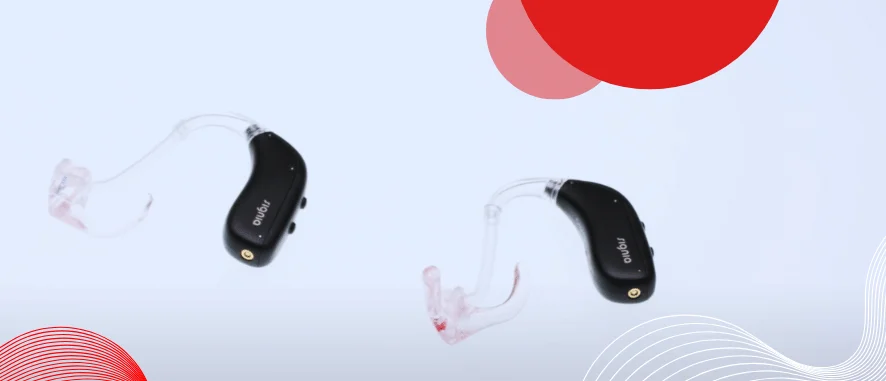
The style of hearing aid — Behind-the-ear (BTE), receiver-in-canal (RIC), and in-the-ear (ITE) styles each have advantages depending on the degree of loss and ear canal health.
Features for your lifestyle — Modern hearing aids come with Bluetooth connectivity, rechargeable batteries, noise reduction, directional microphones, and app-based controls. If you struggle with speech clarity in noise (common with sensorineural loss), look for aids with strong noise management features.
Working with a qualified audiologist to match a hearing aid to your specific audiogram profile is essential. A device that works well for one person’s audiogram may not be suitable for another’s.
Living with Mixed Hearing Loss: Practical Tips
Managing mixed hearing loss goes beyond choosing the right device. Here are some practical strategies to help in daily life:
Advocate for yourself in conversations — Let people know you have hearing loss and ask them to face you when speaking, speak clearly (not louder), and reduce background noise where possible.
Make use of hearing loop systems — Many public venues have induction loop (telecoil) systems that transmit sound directly to compatible hearing aids, cutting out background noise.
Use captioning and assistive technology — Smartphone apps, TV captioning, and video call captions can significantly reduce listening fatigue.
Protect the hearing you have — If you have any residual hearing, protect it. Use ear protection in noisy environments to prevent further sensorineural damage.
Stay consistent with follow-up appointments — Mixed hearing loss can change over time, especially if there are recurrent ear infections or progressive inner ear changes. Regular audiograms ensure your hearing aids stay correctly programmed.
When to See an Audiologist
If you have not yet been evaluated, consider seeing an audiologist if you:
— Frequently mishear or misunderstand speech
— Notice a difference in hearing between your two ears
— Experience a sudden change in hearing
— Have a history of ear infections or ear surgery
— Feel a sense of fullness or pressure in one or both ears
— Have tinnitus alongside reduced hearing
Early diagnosis and management of mixed hearing loss can significantly improve quality of life and prevent further deterioration, particularly of the conductive component.
Frequently Asked Questions About Mixed Hearing Loss Audiograms
Can mixed hearing loss be cured?
The conductive component may be partially or fully corrected with medical or surgical treatment. The sensorineural component is typically permanent, but its impact can be greatly reduced with appropriate hearing aids or implantable devices.
Is mixed hearing loss common?
It is less common than purely sensorineural hearing loss, but it is not rare. It tends to be seen more frequently in people who have had chronic ear disease, trauma, or certain conditions like otosclerosis.
Can children have mixed hearing loss?
Yes. Children with recurrent ear infections (otitis media) who also have inner ear involvement may develop mixed hearing loss. It is important to have children’s hearing tested if there are concerns, as hearing loss can affect speech and language development.
Will my mixed hearing loss get worse?
This depends on the underlying causes. With proper treatment of the conductive component and protection of the remaining sensorineural hearing, many people can stabilize their condition. Regular monitoring with audiograms is important.
Can I wear regular hearing aids with mixed hearing loss?
In most cases, yes — particularly after the conductive component has been treated medically or surgically. Your audiologist will determine the most appropriate style and programming based on your current audiogram.
Conclusion
A mixed hearing loss audiogram tells a two-part story: one about the health of your middle ear and its ability to conduct sound, and another about the health of your inner ear and its ability to process it. Understanding the air-bone gap, the degree of loss across frequencies, and what those symbols on the graph represent can empower you to have more informed conversations with your audiologist and make better decisions about your hearing health.
Whether you are newly diagnosed or reviewing a long-standing condition, the right combination of medical treatment and hearing technology can make a meaningful difference. If you have questions about hearing aids suited to your audiogram, or if you are looking for professional-grade devices to help manage your mixed hearing loss, exploring your options with a trusted hearing health provider is always the best first step.

Leave a Comment
Your email address will not be published. Required fields are marked *