
Degrees of Hearing Loss: A Complete Guide to Understanding Hearing Loss Levels
Hearing loss affects over 1.5 billion people worldwide, yet many individuals remain unaware of where their hearing falls on the spectrum. Whether you’ve recently noticed difficulty following conversations or have been referred for a hearing evaluation, understanding the degrees of hearing loss is the first step toward better hearing health.

What Is a Degree of Hearing Loss?
A degree of hearing loss refers to the severity of hearing impairment, measured in decibels (dB) through a professional hearing test called an audiogram. During this test, an audiologist measures the softest sounds you can hear across a range of frequencies. Based on your results, your hearing is classified into one of several categories — from normal hearing to profound hearing loss.
The Degrees of Hearing Loss Chart
Below is a breakdown of the universally recognized degrees of hearing loss, as defined by the World Health Organization (WHO) and most audiological standards:
Normal Hearing — 0 to 25 dB Individuals in this range can hear all speech sounds and soft environmental sounds without difficulty. No hearing aids or assistive devices are typically needed.
Mild Hearing Loss — 26 to 40 dB People with mild hearing loss may struggle to follow soft speech or conversations in noisy environments. Common complaints include missing parts of sentences or frequently asking others to repeat themselves. Hearing aids may be recommended in this range.
Moderate Hearing Loss — 41 to 55 dB At this level, conversational speech at a normal volume becomes difficult to understand without amplification. Many sounds, especially consonants, are missed. Hearing aids are strongly advised and can make a significant difference in day-to-day communication.
Moderately Severe Hearing Loss — 56 to 70 dB Individuals experience difficulty even with louder speech. Group conversations and telephone use become increasingly challenging. Hearing aids are essential at this stage for functional communication.
Severe Hearing Loss — 71 to 90 dB People with severe hearing loss can hear very little or no speech at conversational levels. They may rely on powerful hearing aids, lip reading, or cochlear implant evaluation. Communication strategies become important tools at this stage.
Profound Hearing Loss — 91 dB and above Profound hearing loss means little to no sound is perceived without significant amplification. Cochlear implants or specialized devices are often the most effective options. Sign language may also be a preferred mode of communication for many individuals in this category.
How Is Hearing Loss Measured?
Hearing is measured using a pure-tone audiometry test. A certified audiologist places headphones on the patient and plays a series of beeps at different pitches (frequencies) and volumes. The patient signals when they hear each sound. The results are plotted on an audiogram — a graph showing hearing thresholds across frequencies measured in Hertz (Hz).
The test typically measures frequencies between 250 Hz and 8,000 Hz, which covers the range of speech sounds. The softest level at which a person consistently hears a given frequency is their hearing threshold at that pitch.
Types of Hearing Loss
In addition to degrees, hearing loss is also categorized by type:
Conductive Hearing Loss occurs when sound cannot efficiently travel through the outer or middle ear. This is often caused by ear infections, fluid in the ear, or earwax buildup, and is frequently treatable.
Sensorineural Hearing Loss results from damage to the inner ear (cochlea) or auditory nerve. This is the most common type of permanent hearing loss and is typically addressed with hearing aids or cochlear implants.
Mixed Hearing Loss is a combination of both conductive and sensorineural components.
Common Signs of Hearing Loss Across Degrees
Regardless of the specific degree, several warning signs indicate it may be time to get your hearing tested:
- Frequently asking people to repeat themselves
- Turning up the television or radio to high volumes
- Difficulty understanding speech in noisy environments
- Feeling that others are mumbling
- Missing parts of phone conversations
- Ringing or buzzing in the ears (tinnitus)
- Difficulty hearing high-pitched sounds like birds or alarms
What Causes Hearing Loss?
Hearing loss can develop at any age and may be caused by a variety of factors:
Age-related hearing loss (Presbycusis) is the most common form, gradually affecting many people over the age of 60 as the sensory cells in the cochlea wear down.
Noise-induced hearing loss results from prolonged or sudden exposure to loud sounds — whether from occupational noise, concerts, or recreational activities like shooting sports.
Genetic factors play a role in both congenital (present at birth) and adult-onset hearing loss.
Ototoxic medications including certain antibiotics, chemotherapy drugs, and high doses of aspirin can damage hearing.
Ear infections and diseases such as otosclerosis, Meniere’s disease, or chronic otitis media can progressively affect hearing ability.
Head trauma can damage the structures of the inner ear or auditory nerve.
How Hearing Aids Help Across Different Degrees
Hearing aids are the most common and accessible solution for most degrees of hearing loss:
For mild to moderate hearing loss, small, discreet devices like Receiver-in-Canal (RIC) or In-the-Ear (ITE) hearing aids are highly effective and cosmetically appealing.
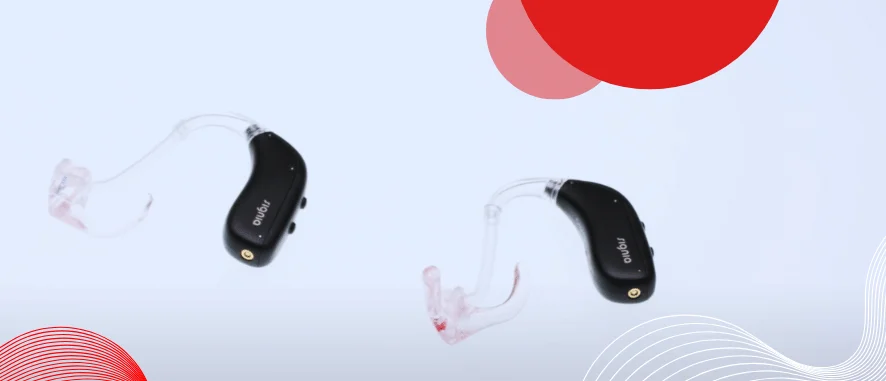
For moderately severe to severe hearing loss, Behind-the-Ear (BTE) hearing aids with more powerful amplification provide better sound delivery.
For profound hearing loss, super-power BTE devices or cochlear implants offer the most benefit, often dramatically improving quality of life.
Modern hearing aids also come equipped with Bluetooth connectivity, rechargeable batteries, background noise reduction, and tinnitus masking features — making them more capable than ever before.
When Should You Get a Hearing Test?
Audiologists and hearing health experts recommend:
- Adults get a hearing test at least once every decade up to age 50
- Adults over 50 should be tested every three years
- Anyone experiencing sudden hearing loss should seek medical attention immediately
- Children should be screened at birth, during school years, and any time hearing concerns arise
Early detection of hearing loss is critical. The longer hearing loss goes untreated, the greater the impact on cognitive function, mental health, and social relationships. Studies have linked untreated hearing loss to increased risk of cognitive decline, depression, and social isolation.
Frequently Asked Questions About Hearing Loss Degrees
Can mild hearing loss get worse? Yes. Without proper management and protection from loud noise, mild hearing loss can progress to moderate or severe levels over time.
Is hearing loss reversible? Conductive hearing loss is often reversible with medical treatment. Sensorineural hearing loss is typically permanent, but hearing aids and cochlear implants can greatly improve hearing function.
At what degree of hearing loss do you need a hearing aid? Hearing aids are often recommended starting at mild hearing loss (26–40 dB), especially if the loss is affecting daily communication and quality of life.
What is the difference between hard of hearing and deaf? “Hard of hearing” generally refers to mild to severe hearing loss where spoken communication is still possible with amplification. “Deaf” typically refers to profound hearing loss where spoken communication without assistive technology is not functional.
Conclusion: Take the First Step Toward Better Hearing
Understanding the degrees of hearing loss is essential for identifying your needs and exploring the right solutions. Whether you’re experiencing the early signs of mild hearing loss or have been living with more significant impairment, today’s hearing technology offers more hope and options than ever before.
At Earmart, we are committed to helping you find the right hearing solution for your unique degree and type of hearing loss. From expert audiological assessments to a wide range of hearing aids for every budget and lifestyle, we’re here to guide you every step of the way.
Book your free hearing assessment with Earmart today and take control of your hearing health.

Pingback: Conductive vs. Sensorineural Hearing Loss: What’s the Difference and What Can You Do About It?
Pingback: Kaan Ki Machine Price in Aurangabad