

If you have been searching for a hearing aid that is discreet, comfortable, and packed with modern features, you have probably come across the term “RIC hearing aid.” But what exactly does RIC mean, how does it work, and is it the right choice for you? At Earmart, we believe that making an informed decision starts with understanding the technology. This guide covers everything you need to know about RIC hearing aids in simple, clear language.
What Does RIC Stand For?
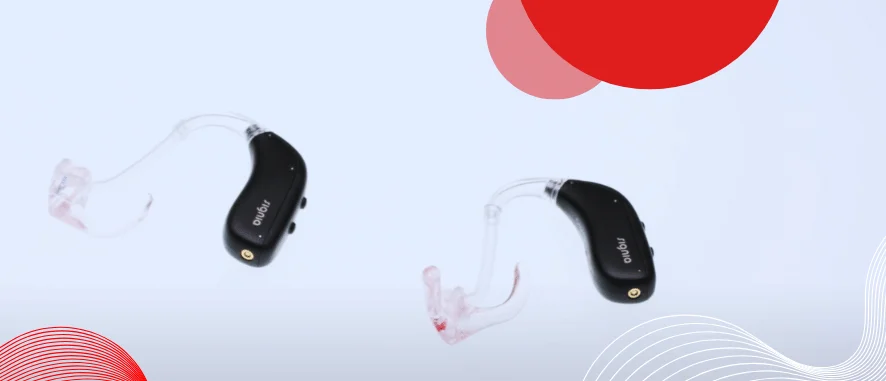
RIC stands for Receiver-in-Canal. It refers to a specific style of hearing aid where the receiver — also known as the speaker — is placed directly inside the ear canal rather than being housed in the main body of the device. A thin, nearly invisible wire connects the small unit worn behind the ear to the receiver sitting in the canal.
This is the key difference between a RIC hearing aid and a traditional Behind-the-Ear (BTE) hearing aid. In a conventional BTE, all components including the microphone, processor, and speaker are packed into one casing behind the ear. In a RIC model, the speaker is separated and moved closer to the eardrum, which delivers a more natural and clearer sound experience.
RIC hearing aids are also commonly referred to as RITE (Receiver-in-the-Ear) hearing aids. Both terms describe the same technology.
How Does a RIC Hearing Aid Work?
Understanding how a RIC hearing aid functions helps you appreciate why so many audiologists and hearing care professionals recommend this style. Here is a step-by-step breakdown of the process:
Step 1 — Sound Capture The microphones built into the small casing behind your ear pick up sounds from your surrounding environment. These tiny microphones are designed to capture a wide range of frequencies, from soft speech to background noise.
Step 2 — Sound Processing The processor inside the behind-the-ear unit analyzes the incoming sounds. It filters out unwanted background noise, enhances speech clarity, and adjusts the amplification based on your personal hearing profile and the specific frequencies you struggle with. This processing happens in milliseconds.
Step 3 — Signal Transmission The processed electrical signal travels down the thin connecting wire from the behind-the-ear unit to the receiver sitting in your ear canal.
Step 4 — Sound Delivery The receiver converts the electrical signal back into sound waves and delivers them directly into your ear canal, very close to the eardrum. Because there is no long plastic tube involved (as in traditional BTE models), the sound is cleaner, crisper, and feels more natural.
This close proximity to the eardrum reduces acoustic distortion and gives users a listening experience that feels more like natural, unaided hearing.
The Three Main Components of a RIC Hearing Aid
A RIC hearing aid is made up of three key parts that work together seamlessly:
- The Behind-the-Ear (BTE) Housing This is the small, slim unit that rests comfortably over the top of your outer ear. It contains the microphones, the digital processor (the brain of the device), the battery or rechargeable cell, and any wireless connectivity components such as Bluetooth. Modern RIC housings are remarkably thin and lightweight, making them barely noticeable.
- The Connecting Wire A hair-thin wire links the BTE housing to the receiver inside the ear canal. This wire is extremely fine and practically invisible, especially when the device is in place. It is surprisingly durable and is designed to flex naturally with everyday movement.
- The Receiver (Speaker) The receiver is the small speaker that sits inside your ear canal. It is typically fitted with a soft silicone dome tip or a custom earmold for a comfortable and secure fit. Different receiver sizes — standard, medium, and high power — are available to match varying degrees of hearing loss.
Who Should Use a RIC Hearing Aid?
RIC hearing aids are one of the most versatile styles available today and are suitable for a wide range of people. Here is a closer look at who benefits most from them:
People with Mild to Severe Hearing Loss RIC hearing aids can accommodate a broad spectrum of hearing loss. If your needs change over time, the receiver can often be upgraded to a higher-power version without replacing the entire device, which makes RICs a cost-effective long-term solution.
People with High-Frequency Hearing Loss High-frequency hearing loss is one of the most common patterns seen in adults, particularly as they age. This type of hearing loss makes it difficult to hear higher-pitched sounds such as women’s and children’s voices, consonants like “s,” “f,” and “th,” and birdsong. RIC hearing aids are particularly well suited for this pattern because the open-fit design allows low-frequency sounds to enter the ear naturally while only amplifying the higher frequencies where help is needed.
First-Time Hearing Aid Users Many new hearing aid users find the “plugged” or “echo” sensation uncomfortable when they first try hearing aids. This occlusion effect is minimised with RIC hearing aids because the soft dome tip does not fully seal the ear canal. The result is a more natural, open sound that new users tend to adapt to quickly and comfortably.
Active and Tech-Savvy Individuals Modern RIC hearing aids come loaded with features that suit busy, connected lifestyles. Most current models offer Bluetooth streaming, allowing you to connect directly to smartphones, televisions, and other devices. Many also feature rechargeable batteries, app-based controls, and AI-powered sound processing that automatically adjusts to your environment.
Professionals and Office Workers For people who spend a lot of time in meetings, on phone calls, or in varied acoustic environments, RIC hearing aids offer excellent speech clarity and hands-free convenience through wireless connectivity.
Key Benefits of RIC Hearing Aids
Discreet Appearance The slim wire and compact behind-the-ear housing make RIC hearing aids among the least visible styles available. Most people around you will not notice you are wearing one at all.
Natural Sound Quality Because the speaker delivers sound directly in the ear canal and the open fit allows natural low-frequency sounds to pass through, users consistently report that RIC hearing aids sound more natural compared to other styles.
Comfort for All-Day Wear The soft dome tips used with most RIC hearing aids are far more comfortable than rigid custom earmolds for many wearers. The lightweight design reduces ear fatigue during extended use.
Easy Receiver Replacement If the receiver wears out or your hearing changes and you need a more powerful speaker, an audiologist can often replace just the receiver during a brief clinic visit. This is much faster and less expensive than replacing the entire hearing aid.
Wide Range of Advanced Features RIC hearing aids are available across all technology levels, from entry-level to premium. Higher-tier models typically offer features such as directional microphones, automatic environment detection, tinnitus masking programs, rechargeability, and direct Bluetooth streaming.
Compatibility with Glasses The slim profile of RIC hearing aids means they sit comfortably behind the ear even for spectacle wearers, without the awkward bulk that thicker BTE models can sometimes cause.
RIC Hearing Aid vs. Traditional BTE: What Is the Difference?
Both styles sit behind the ear, but there are meaningful differences between them.
In terms of speaker location, a RIC places the receiver inside the ear canal while a traditional BTE keeps the speaker inside the housing behind the ear, connected to the ear via a plastic tube and earmold. In terms of sound quality, the RIC generally delivers cleaner, more natural sound because there is no sound-carrying tube introducing distortion. When it comes to visibility, the RIC is noticeably more discreet thanks to its thin wire and smaller housing. For the occlusion or “blocked” feeling, the open fit of a RIC greatly reduces this compared to a fully sealed BTE earmold. In terms of suitable hearing loss range, RICs work well from mild to severe loss, while traditional BTEs are often better suited to severe to profound hearing loss where more power is required.
Things to Consider Before Choosing a RIC Hearing Aid
RIC hearing aids are an excellent choice for most people, but there are a few considerations to keep in mind:
Dexterity Requirements The connecting wire and small dome tip require reasonable finger dexterity to handle. If you have arthritis or limited hand mobility, ask your hearing care professional about easier-to-manage options or rechargeable models that eliminate the need to handle tiny batteries.
Earwax Build-up Because the receiver sits in the ear canal, it is more exposed to earwax than a traditional BTE. Regular cleaning and occasional receiver replacement are important to keep the device working well. Your hearing care professional will show you how to maintain it properly.
Moisture and Physical Activity Most modern RIC hearing aids carry an IP rating for moisture and dust resistance, making them suitable for daily life including light exercise and exposure to perspiration. However, they are not designed for swimming or submersion.
Degree of Hearing Loss If you have profound hearing loss, a traditional BTE or a custom in-the-ear power aid may provide more amplification than a standard RIC. Your audiologist will guide you to the right solution based on your hearing test results.
How to Find the Right RIC Hearing Aid at Earmart
At Earmart, we stock a carefully selected range of RIC hearing aids from leading brands, covering every technology level and budget. Whether you are looking for a basic, reliable model for everyday listening or a feature-rich premium device with direct Bluetooth streaming and smartphone app control, our team is here to help you find the perfect fit.
We recommend starting with a professional hearing assessment. Understanding your specific hearing profile — the exact frequencies and degrees at which your hearing differs from normal — is the foundation of finding a hearing aid that truly works for you. From there, our hearing care professionals will match you with devices that suit your lifestyle, preferences, and budget, and will ensure the device is precisely programmed to your needs.
A RIC hearing aid properly fitted and fine-tuned to your hearing profile can make a remarkable difference to your quality of life — making conversations easier, reducing listening fatigue, and reconnecting you with the sounds that matter most.
Frequently Asked Questions About RIC Hearing Aids
How long does a RIC hearing aid last? With proper care and regular professional maintenance, a RIC hearing aid typically lasts between five and seven years. The receiver may need replacing sooner, but this is a quick and affordable repair.
Can I wear a RIC hearing aid with glasses? Yes. RIC hearing aids have a slim enough profile to sit comfortably alongside spectacle frames without discomfort. It is generally easier to put your glasses on first and then position the hearing aid.
Are RIC hearing aids waterproof? Most modern RIC hearing aids have IP54 to IP68 dust and moisture resistance ratings, which means they can handle everyday exposure to sweat and light rain. They are not intended for swimming or full submersion.
Will a RIC hearing aid completely fix my hearing loss? Hearing aids amplify and process sound to make hearing easier, but they do not restore hearing to normal. With the right device and proper fitting, most users experience a significant improvement in speech clarity and overall hearing ability.
How do I know if a RIC is better than an in-the-ear style for me? This is best determined through a professional hearing assessment and a conversation with a qualified audiologist or hearing care specialist. Both styles have strengths, and the right choice depends on your degree of hearing loss, lifestyle, and personal preferences.
Ready to Explore RIC Hearing Aids?
A RIC hearing aid combines modern technology, natural sound quality, and a discreet design into one of the most popular and effective hearing solutions available today. If you are experiencing hearing difficulties or are ready to upgrade from an older device, Earmart is here to guide you every step of the way.
Browse our range of RIC hearing aids online or visit your nearest Earmart location for a professional hearing consultation. Better hearing is closer than you think.

Leave a Comment
Your email address will not be published. Required fields are marked *